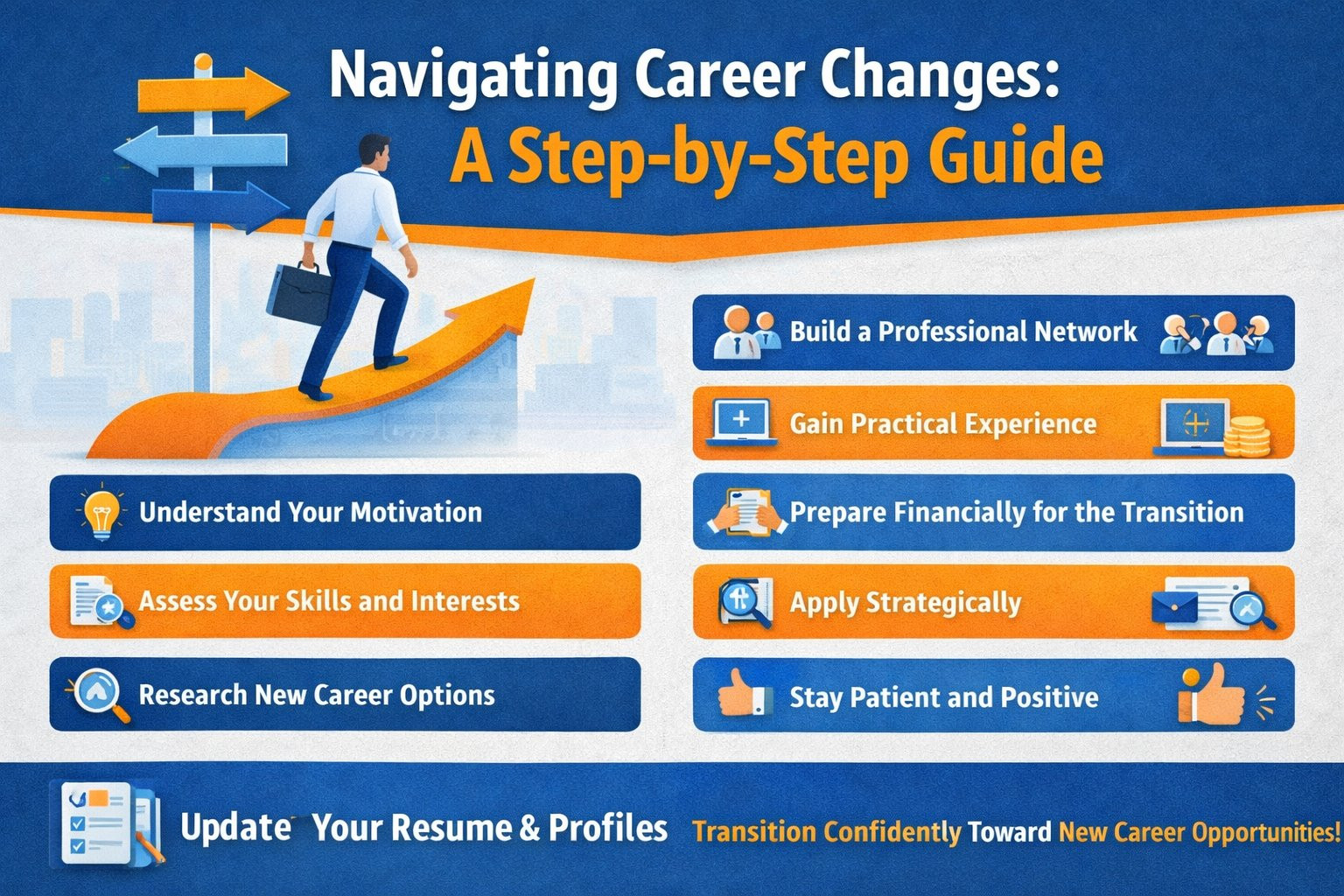
Navigating Career Changes: A Step-by-Step Guide

jobpost By Admin Published on February 25

Navigating Career Changes: A Step-by-Step Guide

Changing careers can feel challenging, but it can also open the door to new opportunities, growth, and satisfaction. With the right approach, you can transition smoothly and confidently into a new professional path.

1. Understand Your Motivation

Start by identifying why you want a career change. Whether it’s for better growth, work-life balance, or passion, clarity will guide your decisions.

2. Assess Your Skills and Interests

List your strengths, transferable skills, and interests. This helps you discover roles or industries where your existing experience is valuable.

3. Research New Career Options

Explore industries, job roles, and required qualifications. Learn about market demand, salary expectations, and future opportunities.

4. Identify Skill Gaps

Compare your current skills with those needed for your target role. Take online courses, certifications, or training to bridge the gaps.

5. Update Your Resume and Online Profiles

Highlight transferable skills and relevant achievements. Adjust your LinkedIn profile and portfolio to match your new career direction.

6. Build a Professional Network

Connect with professionals in your desired field. Attend webinars, join communities, and seek advice or mentorship.

7. Gain Practical Experience

Start with freelance projects, internships, volunteering, or side projects to build real-world experience in your new field.

8. Prepare Financially for the Transition

Career changes may involve temporary income adjustments. Plan savings and manage expenses to reduce stress during the transition.

9. Apply Strategically

Focus on roles that match your transferable skills and growth potential. Customize each application to show how your background fits.

10. Stay Patient and Positive

Career transitions take time. Stay consistent, keep learning, and view challenges as part of the journey.

Conclusion

A career change is not just a shift in jobs—it’s a step toward a more fulfilling future. With careful planning, skill-building, and persistence, you can successfully navigate the transition and achieve your professional goals.